

Subcategories for this page ...
- Parenting
- Food
- Furniture, equipment
- Bio-tech advances
- Technology
- Musical, audio equipment
- Green products
- Academic research
 September 2018
Boldly Bearcat
Finding his voice
Danger in the tap
Virtual defense
Global game changer
Celebrating UC's Bicentennial
 Past Issues
Browse our archive of UC Magazine past issues.
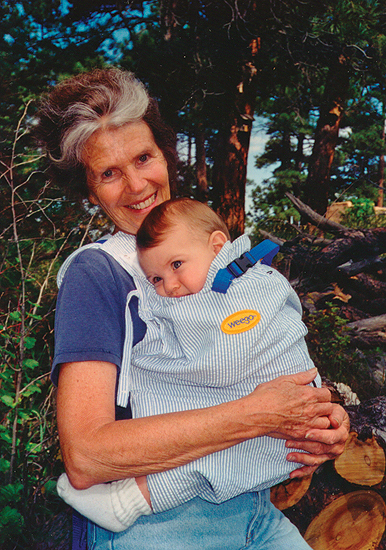
Ann Moore, Nur '56, invented the Snugli — the original hands-free soft baby carrier — in the mid-'60s, which greatly influenced American culture by changing the way parents bond with their babies. Moore's design has been honored with permanent placement in the Smithsonian Institute and was recognized by the Wall Street Journal as one of the most important inventions of the 20th century. Her idea grew from her experience as a Peace Corps nurse. While pregnant with her own daugher, she longed to experience the same calm closeness with her newborn that she had witnessed African mothers enjoy in Togo. In 1999, Moore introduced a new soft baby carrier, the Weego. In 1986, she and her husband also designed a backpack for patients who depend on oxygen tanks to breathe. Their company Air Lift offers a broad line of soft-sided oxygen carriers, equipment accessories and home-health professional bags. (Read her entire story in UC Magazine.)

Invented by George Sperti (1900-91), Eng ’23, in 1952 (Read UC Magazine article on Sperti.)
Developed by Mel Schulman (1921-2003), A&S ’47
Procter & Gamble’s stackable chip shape was designed by former UC astronomer Paul Herget (1908–1981), A&S ’31, M (A&S) ’33, D (A&S) ’35, HonDoc ’78
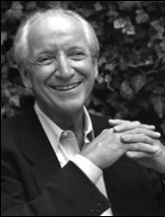
Michael Graves
Plus sleekly designed stainless steel kitchen appliances and cookware, sophisticated chess and Chinese-checker boards, bedding, even backyard pavilions, all designed by architect Michael Graves, DAAP ’58, HonDoc ’82, for Target department stores (Read more.)
An architect’s desk and table at Marshall Fields, also designed by architect Michael Graves, DAAP ’58, HonDoc ’82, who has designed more than a thousand consumer products in all (Read more.)
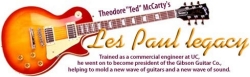
Theodore "Ted" McCarty (1910– 2001), Eng '33, helped develop the electric guitar while president of Gibson Guitar Corp. from 1950-66. During his tenure, the company produced the Les Paul, the Flying V and the Firebird. (Read the UC Magazine story on McCarty.)
Invented by student Winston Kock (1909-82), Eng ’32, MS (Eng) ’33, HonDec ’52, as his electrical engineering undergraduate thesis. Held more than 80 patents and was founding director of NASA’s Electronics Research Center in Boston.
First high-fidelity in-wall speaker, developed by Sonance, world leader in making in-wall, in-ceiling and multi-room audio systems; CEO Chip (Larry) Brown, Bus ’83.
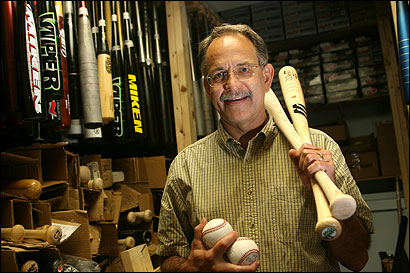
James Sherwood, Eng ’76, MS (Eng) ’77, PhD (Eng) ’87, professor of mechanical engineering, University of Massachusetts at Lowell, is director of the Baseball Research Center and co-director of the Advanced Composite Materials and Textiles Research Lab. He works with the American Society for Testing and Materials, NCAA, National Federation of High Schools and Major League Baseball in the development and application of test methods for bats and balls. He has also worked with the Baseball Hall of Fame in a live broadcast of the physics of baseball. Sherwood has been a visiting scientist with the U.S. Air Force Flight Dynamics and Materials Labs at Wright-Patterson Air Force Base, doing research on landing gear and composite materials. His research in the application of composite materials for crashworthiness of lightweight cars led to his interest in studying bat/ball collisions in 1996.
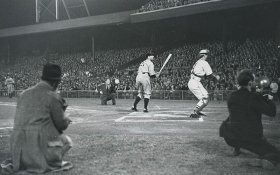
Earl Payne captured this Reds/Phillies photo after the first major league nighttime pitch in 1935. Courtesy/Robert Payne.
Earl Payne, Eng '26, helped design professional baseball's first lighting system -- at Crosley Field in 1935. He had been an electrical engineer at Cincinnati Gas and Electric before having a lengthy military career.
LINKS
John Hall, Eng ’61, developed technology that led to the world's first electronic watch, electronic camera shutter and computerized programmable heart pacemaker. He is also credited with saving the U.S. Minuteman nuclear missile project by solving a circuit problem that caused the missiles to explode unexpectedly while flying through clouds. His pioneering work developing low-power CMOS (complementary metal–oxide–semiconductor) integrated circuit technology also led to Sharp's first portable LCD calculator; a synthesized voice chip in the early '80s, which sounded like a real person, not a digitized robot; as well as military and telecommunication applications. The first electronic watch came from Hall's 1970 trip to Japan in 1970 to help Seiko build the country's first CMOS-fabrication facility after American and Swiss watchmakers rejected his proposals. His latest microchip innovation is Tungsten Gate Merged BiCMOS technology.
The financial industry was revolutionized when the Cincinnati Stock Exchange initiated the world's first fully automated, computerized stock exchange without a trading floor. As president of the Cincinnati Stock Exchange from 1976-89, Richard “Nick” Niehoff, A&S '67, developed the National Securities Trading System (NSTS), approved by the U.S. Securities and Exchange Commission as a pilot program in 1976, then receiving permanent approval in 1985. Soon adopted by the London Stock Exchange, the NSTS model brought order to seven national exchanges chaotically operating independently, made stocks and securities more accessible to the public and opened the field for competition. Although the Cincinnati Stock Exchange was absorbed by the Chicago Board Options Exchange in 1995, the NSTS remains a guiding set of principles for U.S. securities markets. (Visit the Cincinnati Stock Exchange Project website, created by UC journalism students in the fall of 2009.)
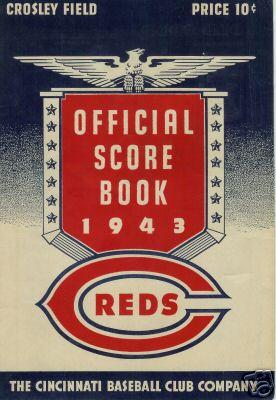
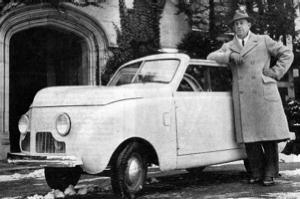
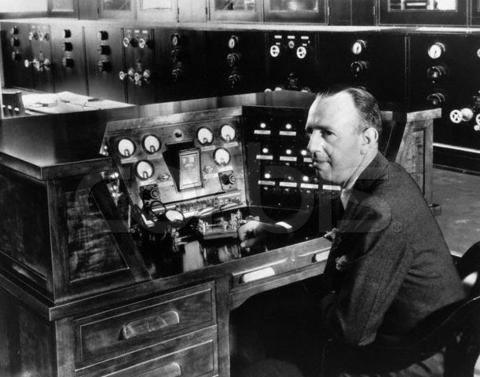
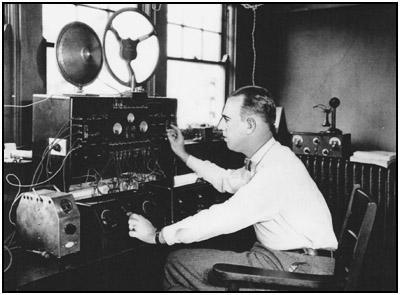
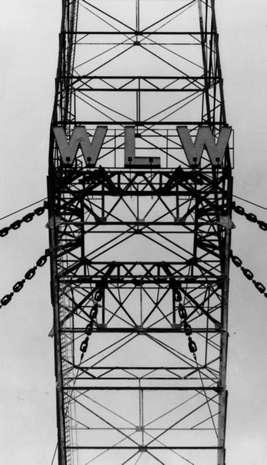
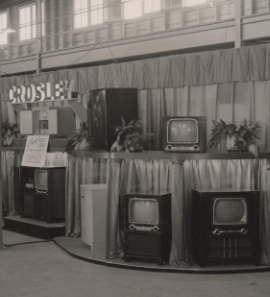
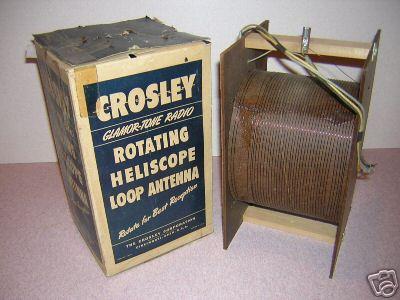
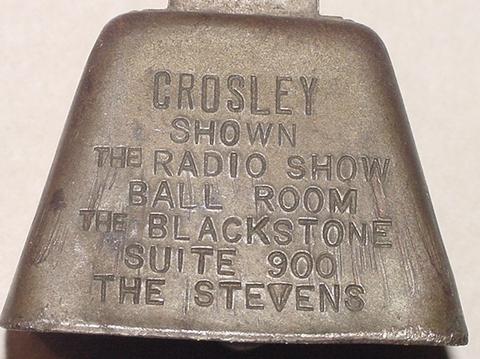
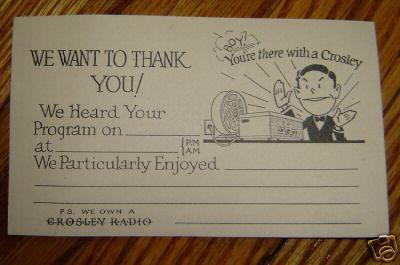
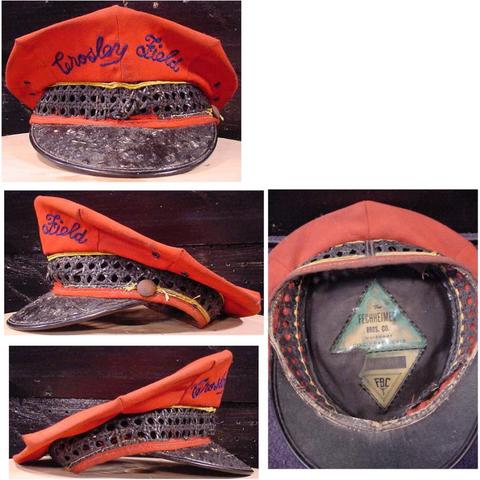
Powel Crosley Jr. (1886-1961), att. Law 1906-07, was an inventor and entrepreneur who owned Crosley Radio Corp., the largest radio manufacturer in the world in 1924. In 1922, his Crosley Broadcasting Corp. began operating a 50-watt commercial station whose call sign was WLW. By 1934, the company's 500,000-watt transmitter, which occasionally was boosted as high as 700,000 watts, was the most powerful radio transmitter in the U.S. He also manufactured Crosley automobiles and appliances. In 1934, he bought the Cincinnati Reds baseball team and held baseball's first night game the next year. The old Crosley Field ballpark in Cincinnati was named for him, and the street-level main entrance to Cincinnati's Great American Ballpark is named Crosley Terrace.

Vinod Dham, M (Eng) ‘77, is considered the "father of the Pentium chip," based upon his contribution to the development of highly successful Pentium Processors from Intel. (Read UC Magazine story.)
Douglas Dayton ,DAAP ’73, helped develop the original Apple mouse. Im all, he has 250 patents to his name, including one of his favorites, a counterweighted arm to support a computer monitor. His invention allows a monitor to be positioned for the user’s convenience. Today, counterbalanced monitors for ergonomic positioning have become the standard.
LINK: Read his whole story.
Adam Hutson, DAAP '92, is credited with two U.S. Patents (5656875 and 6026493), considered pioneering patents, particularly the second one, because they became the basis for a whole category of later patents in electrical energy savings technology in electrical engineering, such as integrated circuit technology.
Alex Green, D (A&S) '48, designed specialized slide rules for military aircraft in the Pacific during World War II while in the Army Air Force — virtually, "versatile computers with data storage and calculation capability," he explains. He developed his first slide rule in 1945 to help the U.S. identify Japanese ships sighted during over-water flights, which resulted in U.S. aircraft sinking half of 77 Japanese warships in two harbors and later an 865-foot battleship. When he received a Medal of Freedom in 1947, the mission was called one of the "longest and most hazardous reconnaissance flights of the war."
Later, he went on to develop slide rules that aided troops in hitting obscured targets, taking bomb-strike photographs with less vulnerability, choosing suitable radar targets and reference points, determining the number and types of bombs and planes required to accomplish missions, and calculating the time needed for a bomber to turn and the wind displacement the plane would experience. He and his team fabricated the equipment and trained troops. Ultimately, his slide rules were vital to solving problems of the most technical military campaign of WW II.
After the war, he served on the UC faculty for seven years, then joined Florida State University, where he initiated its physics PhD program and its Tandem-Van de Graaff nuclear program. He also served as nuclear adviser to the governor of Florida and CEO of the Space Sciences Laboratory at General Dynamics/Convair in San Diego before joining the University of Florida as a graduate research professor. After 40 years there, he retired with emeritus status in 2003. In June 2011, the 92-year-old and his wife celebrated their 65th wedding anniversary.
LINKS: Read more.
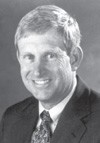
William Lower, Eng ’63, M (Eng) ’65, holds 16 patents associated with screening and particle-analysis equipment, developed during his years at Rotex, a Cincinnati-based leading manufacturer of industrial-screening equipment. Lower began as a product-development engineer at Cincinnati Milling Machine. In 1967, he became chief project engineer at American Laundry Machinery and worked there until 1968 when he moved to Rotex. There Lower moved steadily through the ranks, until 1997 when he was named chairman of the board and chief executive officer. He retired from Rotex in 2007. Lower has been active with his alma mater, most recently serving as a trustee for the UC Foundation. He has been honored with an UC Alumni Distinguished Service Award, the College of Engineering and Applied Science Distinguished Alumni Award and, in 2010, the Herman Schneider Distinguished Alumnus Award.
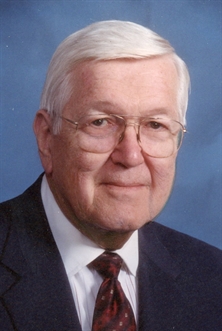
William Forbriger (1930-2013), Eng ’53, was former vice president of Revlon-Realistic Co. and co-owner of the Tressa Co. At Revlon, he developed products for permanents, hair color and dryers, gaining the reputation as “the creator of the best permanent waves in the professional beauty industry.”
C. David Allis, A&S '73, is a biochemist conducting research at the Rockefeller University where he is head of the laboratory of chromatin biology and epigenetics. He is recognized for identifying the first transcription-associated histone, acetyltransferase, which may ultimately frame the "Histone Code" or "Epigenetic Code." The National Academy of Sciences indicates Allis has played a major role in ushering in the modern era of chromatin biology. A member of the American Academy of Arts and Sciences and the National Academy of Sciences, he has won many national and international awards in his field.
Robert Mahl, DAAP ’85, invented the Pocket Huggie and holds the utility patent for it. The eco-friendly, reusable beverage insulator eliminates the need for napkins or coasters with wet beverages and keeps beverages hot or cold longer. A Huggie accommodates cans, water bottles and cups in a stylish manner. The product made a splashy debut when it appeared in George Clooney’s 2011 movie “The Ides of March.” Mahl owns the Cincinnati firm DesignMahl.

''Fingers'' on the inside of the Huggie
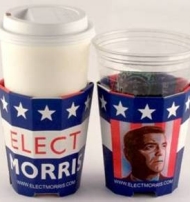
Mahl's Pocket Huggies that were used in the movie ''The Ides of March'' -- campaign items for the Morris election



 after a "skin-of-our-teeth" landing in Xian, China, and survived a 190-MPH headwind, severe turbulence and a supercharger problem that consumed their fuel.")